
74
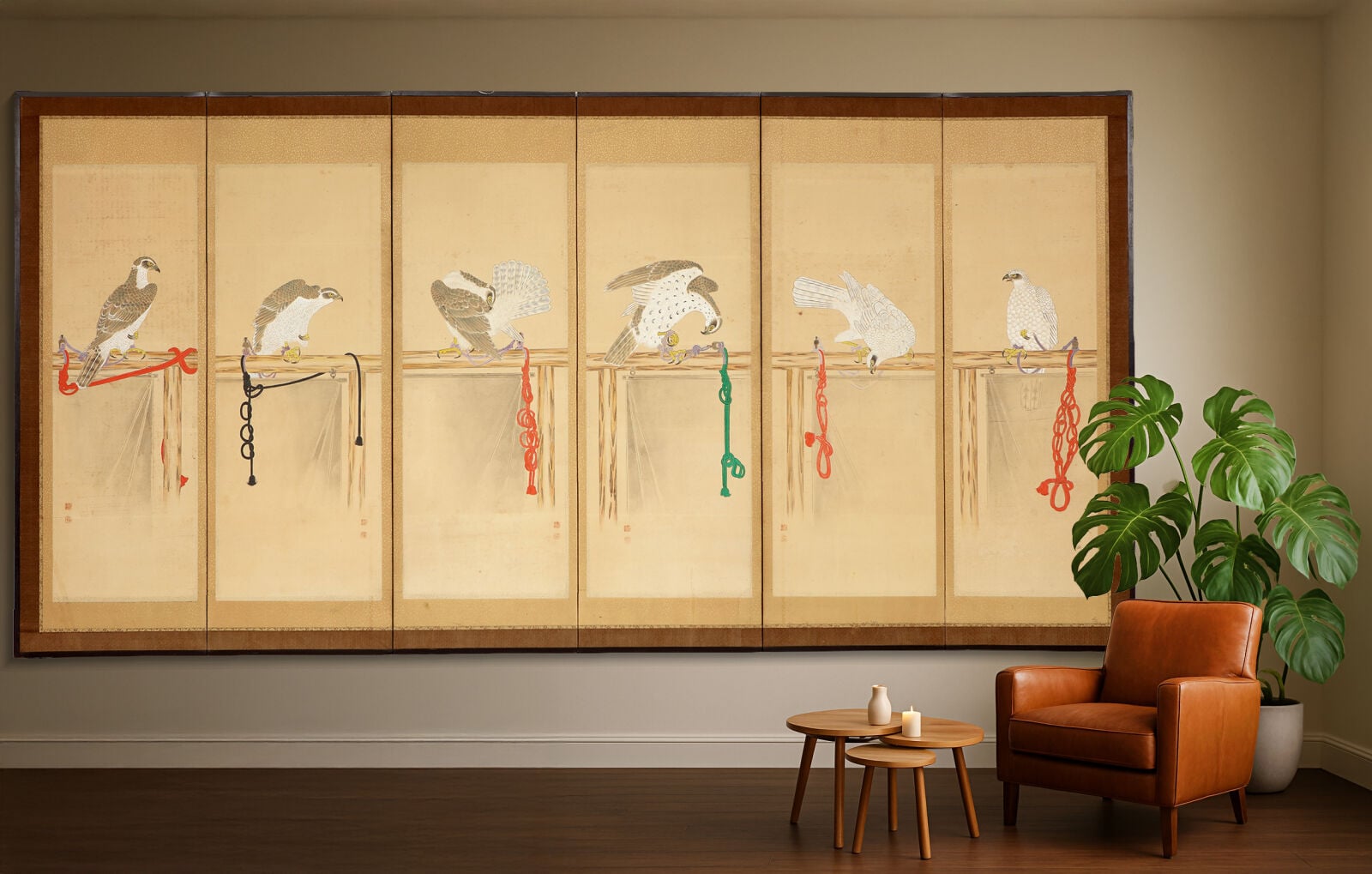
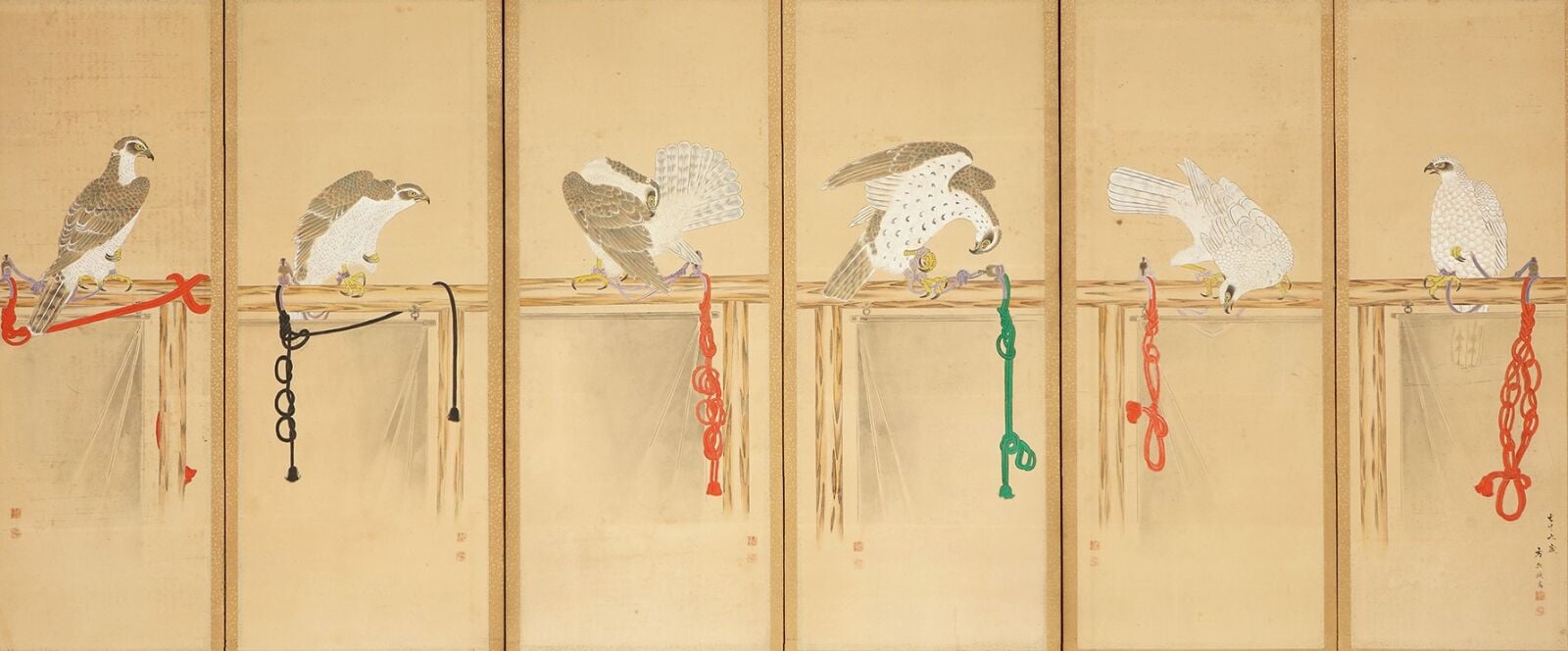
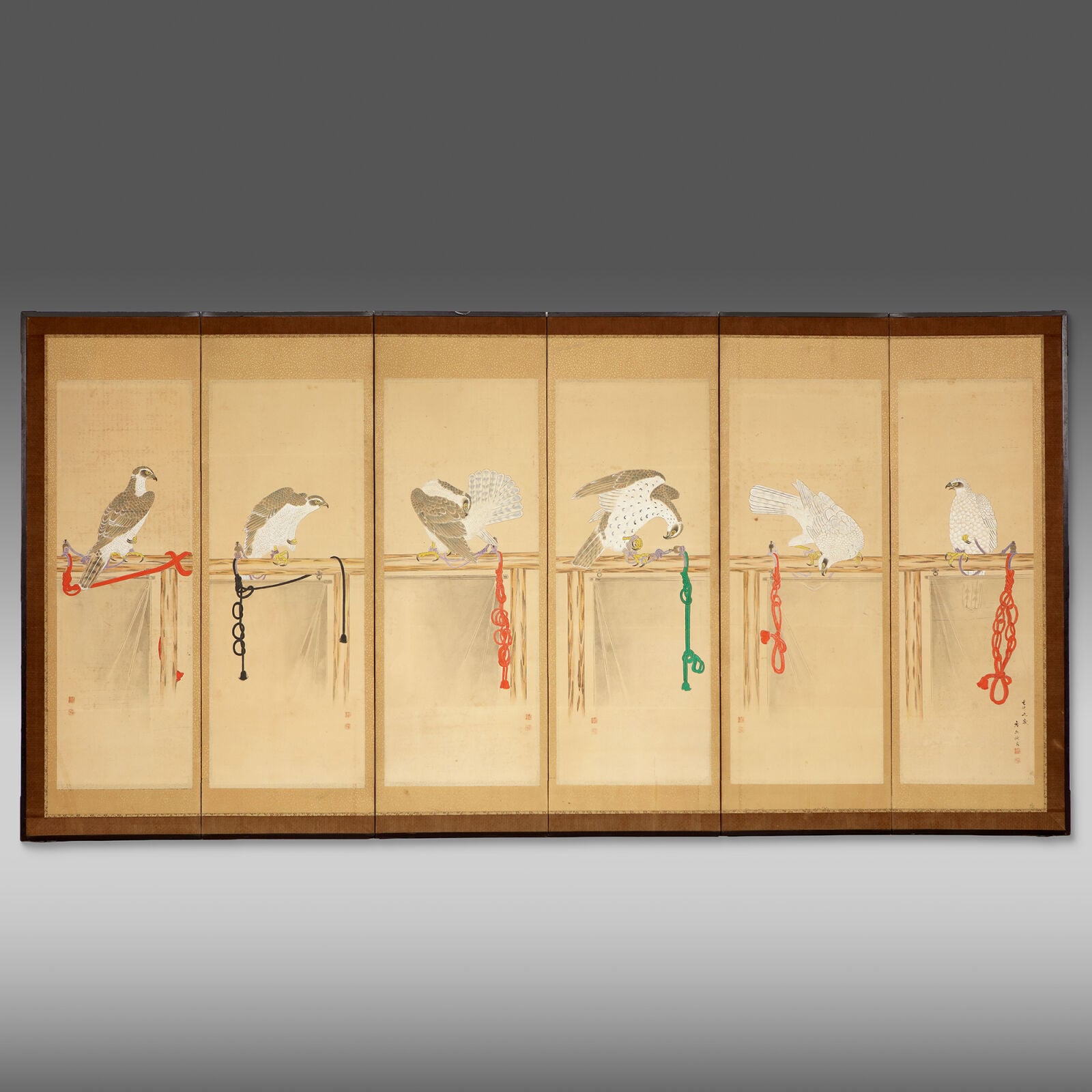
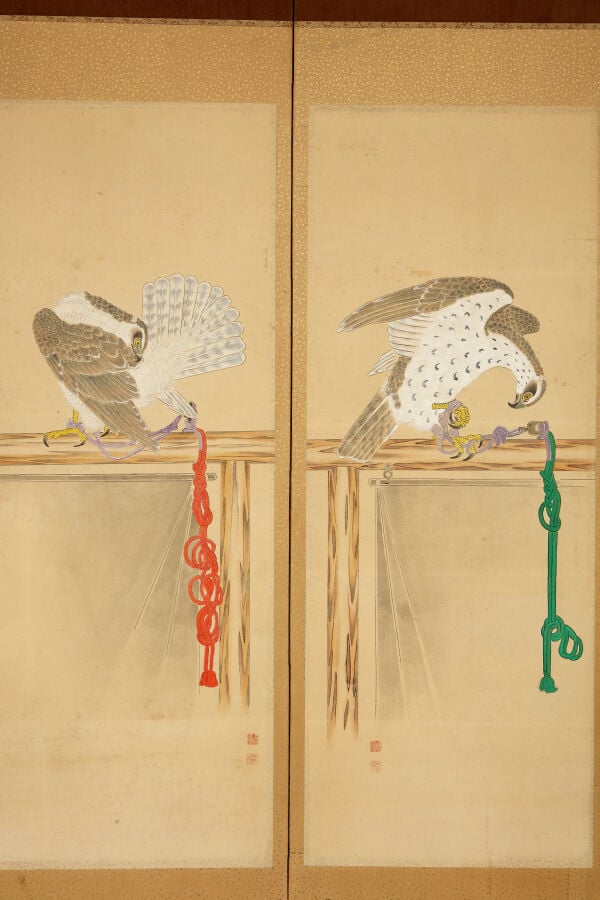
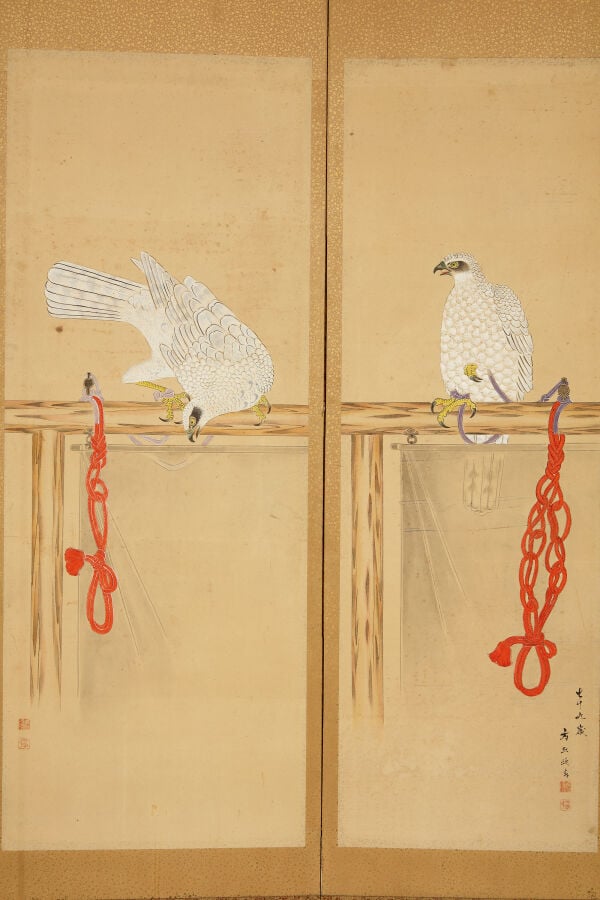
Paravent byôbu 屏 風 à six panneaux composé de six kakejiku 掛 け 軸 , chacune repré…
Estimation :
2500 - 2800 EURParavent byôbu 屏 風 à six panneaux composé de six kakejiku 掛 け 軸 , chacune représentant un faucon 鷹 (taka) sur un perchoir.
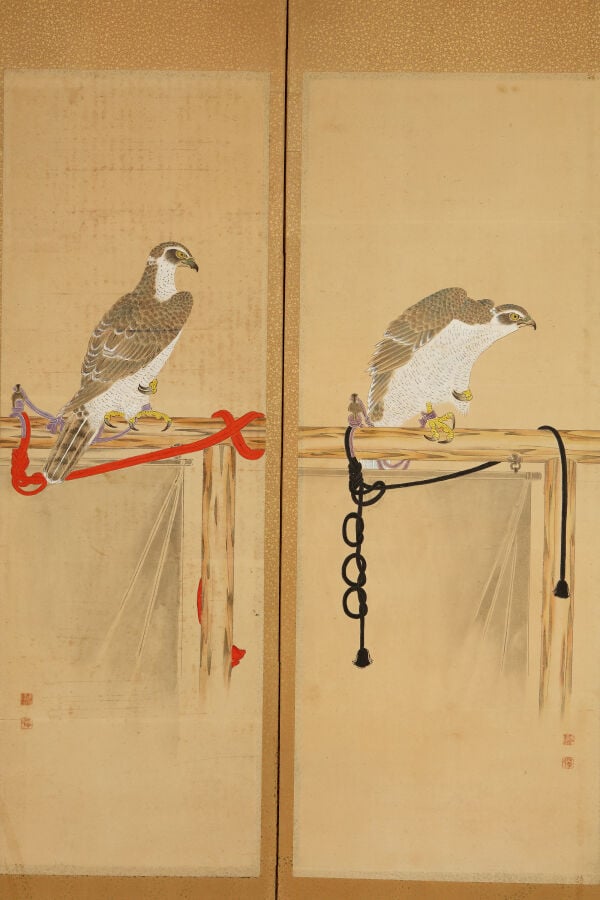
Leurs expressions concentrées transmettent force et retenue, qualités pour lesquelles les faucons ont longtemps été admirés au Japon. En tant qu'imagerie, les faucons étaient étroitement associés à la vertu martiale, à la discipline et au statut d'élite.
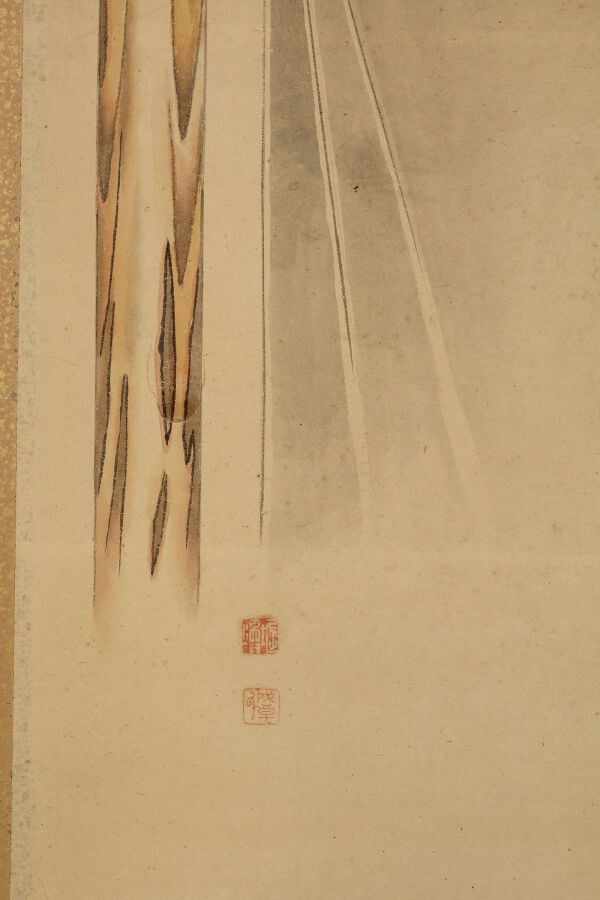
Chaque peinture porte deux sceaux nominatifs rouges.
Couleurs et encre sur papier , les tableaux sont montés sur du papier moucheté feuille d'or et bordés de bordures en soie, avec une fine bande intérieure écrue et une large bande extérieure marron. Dans un cadre en bois laqué noir
Époque : Japon, Époque Meiji (1868-1912)
Dimensions :
Largeur totale : 349 cm (2 x 59,5 cm, 4 x 57,5 cm)
Hauteur : 176,5 cm
Petites traces d'usure et restaurations, petites rayures , pertes mineures de papier.
Petit trou dans le cinquième panneau, retapissage...
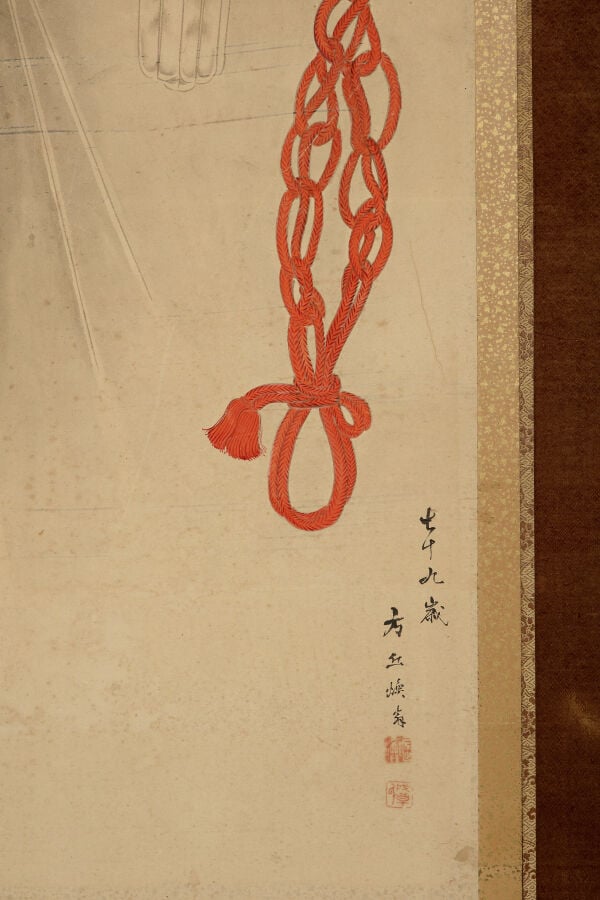
A striking tall six-panel byôbu 屏風 (folding screen) composed of six individual kakejiku 掛け軸 (hanging scroll paintings), each depicting a hawk 鷹 (taka) perched on a pole with a translucent silk drape suspended from the perch. Each bird is secured with decorative silk tethers.
The hawks are rendered with sharp beaks, piercing eyes, and long curving talons. Their focused expressions convey strength and restraint, qualities for which hawks have long been admired in Japan. As imagery, hawks were closely associated with martial virtue, discipline, and elite status.
Falconry was introduced to Japan from China around the 4th century and later developed into a prestigious practice among the samurai class. During the Edo period it became highly formalised, with the Shogunate appointing an official master falconer. From the late Muromachi period onward, paintings of falcons and prized hawks, valued for their solemn and commanding presence, became increasingly popular.
Each painting bears two red name seals. The rightmost panel is additionally signed and dated with the age of the painter at the time of execution: "Age 79" 七十九齋.
Executed in colours and ink on mulberry paper, the paintings are mounted on gold leaf speckled paper and bordered by silk rims, with a slim ecru inner band and a broad brown outer band. The screen is encased in a black lacquered wooden frame fitted with protective metal hardware.
Period: Japan, Meiji period (1868-1912)
Dimensions:
Total width: 349 cm (2 x 59.5 cm, 4 x 57.5 cm)
Height: 176.5 cm
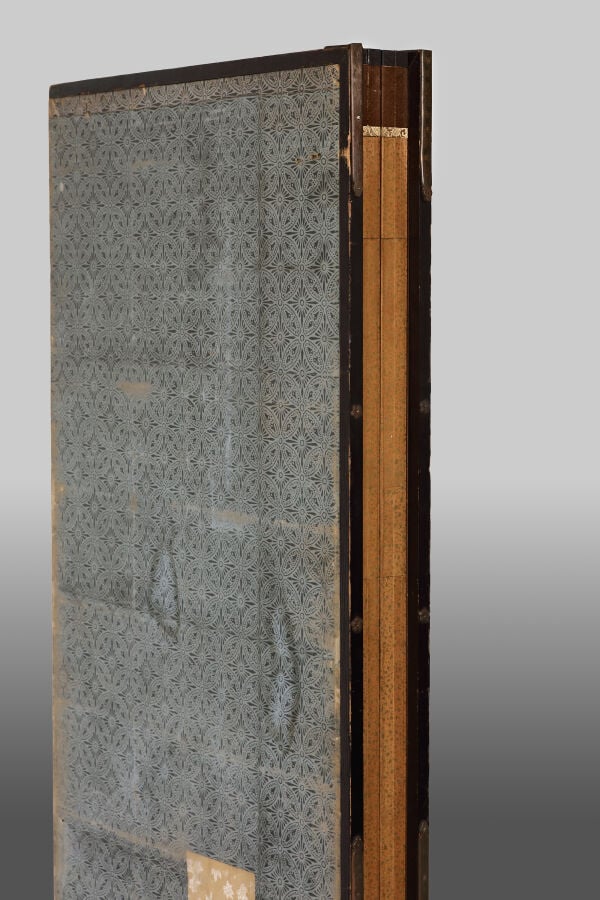
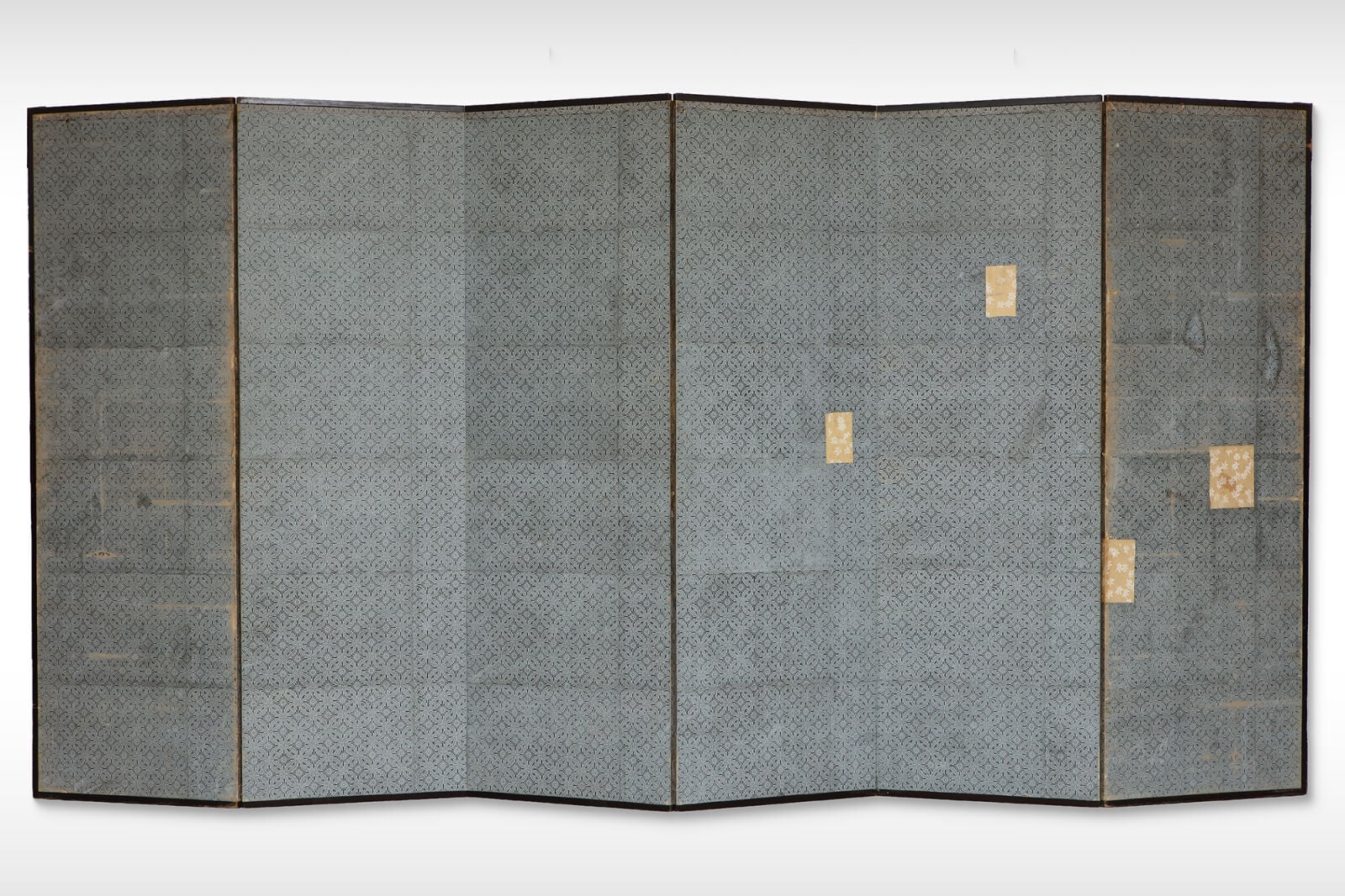
Considering its age, in very good condition with general traces of age, wear, and restorations, including small surface scratches, minor paper losses, and some discoloration. There is a small hole in the fifth panel, and the reverse shows areas of repapering. Please refer to the photos for a clear condition reference.
The folding screen is ideal for mounting flat on a wall and displaying as a single work of art.
When shipped we will include a certificate of authenticity.
Ref. No. : E3480 - BGA 11-25 ! Ce lot étant stocké dans un garde-meubles, il ne sera pas disponible immédiatement après la vente .
Il sera rapatrié à notre étude au 4, rue Raynouard 75016 Paris quelques jours après la vente.